


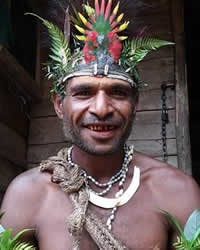

The Duna are an indigenous people of Papua New Guinea who live primarily in the north-western parts of the Southern Highlands Province, especially around the Lake Kopiago and Koroba districts in mountainous terrain. Their homeland is marked by high elevations, rugged landscapes, and fertile valleys where generations have lived in village communities connected by language, kinship, and shared traditions. The name "Duna" is also used for their language, which helps sustain their cultural identity.
Cultural histories indicate that Duna society developed over time through close interaction with neighboring groups, including Huli and Bogaya speakers, and that patterns of trade, intermarriage, and shared customs have shaped relationships across the region. Traditional social structures continue to be important, even as external influences have increased over the last century.
The Duna people are primarily subsistence gardeners and horticulturalists. Sweet potatoes are a staple food crop, and families cultivate a variety of vegetables, fruits, and root crops suited to the highland environment. They also keep domesticated pigs, gather wild foods from surrounding forests, and hunt smaller game to supplement their diet. Fishing in local water bodies such as Lake Kopiago contributes to food resources as well.
Duna communities are organized around clans and larger parish or village groupings. Extended families work together in gardening, house building, and community tasks, and elders often provide guidance and leadership on local matters. The Duna language is central to daily life, though many people also understand Tok Pisin, a national lingua franca used for communication with other groups outside their own communities.
Christianity is the primary religion among the Duna people, and churches are present throughout many villages. Christian gatherings provide opportunities for worship, prayer, and teaching, and church life often plays an important role in how communities gather and interact.
The New Testament has been translated into the Duna language, enabling people to read and hear Scripture in their own language, which supports believers in understanding biblical teaching and growing in their faith. Access to Scripture in a heart language is an important resource for personal devotion and community discipleship.
Traditional cultural values related to family responsibility, respect for elders, and community cooperation continue to influence daily life, and these often coexist alongside Christian beliefs in many communities. However, some put more faith in local spirits than they do for the God of the Bible.
Although the gospel is present among the Duna, continued discipleship and biblical teaching remain important. Leaders in local churches benefit from training and resources that help them teach Scripture with clarity and faithfulness.
Opportunities for communities to engage deeply with the Bible in the Duna language can strengthen both personal faith and communal discipleship. Resources such as Bible study materials, audio scripture, and leadership development can support spiritual growth among families and churches.
As believers grow in understanding and maturity, there is also opportunity for the church among the Duna to share the message of Jesus Christ with neighboring communities throughout the Highlands region.
Pray that Duna believers will grow in their understanding of Scripture and in a faithful walk with Jesus Christ.
Pray for pastors, teachers, and church leaders who will guide their communities with wisdom and biblical truth.
Pray that the Duna New Testament will be widely read, heard, and clearly understood in both homes and churches.
Pray that churches among the Duna will be strengthened and will share the hope of Christ with other peoples throughout Papua New Guinea.
Scripture Prayers for the Duna in Papua New Guinea.
https://en.wikipedia.org/wiki/Duna_people
https://en.wikipedia.org/wiki/Duna_language
https://pnglanguages.sil.org/resources/languages/language/duc
https://peoplegroups.org/people_groups/pg009878/
| Profile Source: Joshua Project |


